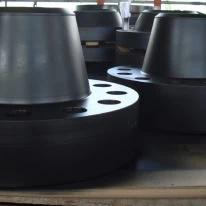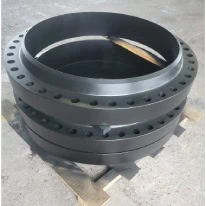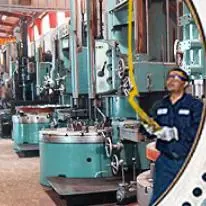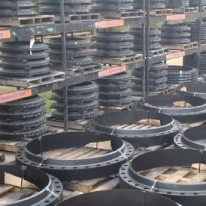
In industries like oil & gas, petrochemical, and waterworks, flange selection can affect system integrity under high-pressure service. Coastal Flange has manufactured and stocked pipe flanges since 1985, supplying carbon, stainless steel, and alloy grades to meet project specifications across these sectors. Learn more about how socket weld flanges work, important design considerations, and where they perform best.
What Are Socket Weld Flanges and How Do They Work?
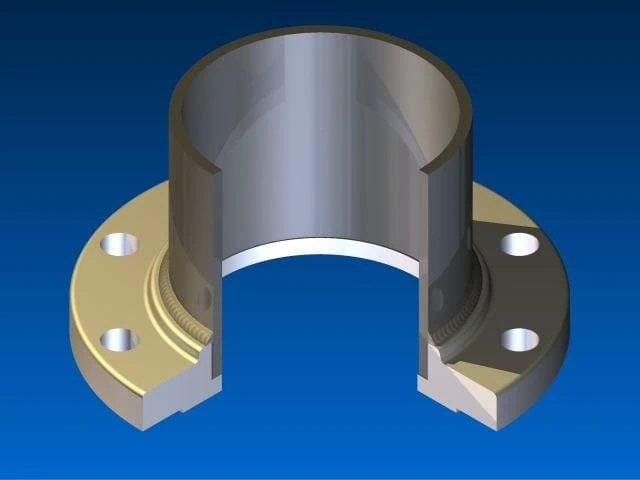
A socket-welded flange connects to piping by inserting the pipe end into a socket. A single fillet weld can be applied around the outside of the hub to secure the joint. This allows for a smooth internal bore and fluid or gas flow. The smooth bore also reduces turbulence on lines carrying particulate-laden fluids.
Socket Weld vs. Slip-On Flanges
Both socket weld and slip-on flanges attach without a long hub but suit different operating conditions. Coastal Flange can provide slip-on flanges that slide over the pipe and are welded on the inside and outside. They can be a practical choice for larger-diameter, lower-pressure lines.
Socket-welded flanges from Coastal Flange use a single external weld and a tight socket fit. These flange types are suitable for smaller pipe sizes where higher pressure ratings are required. For applications with frequent disassembly needs, lap-joint flanges may be the optimal choice.
Design Considerations for Socket Weld Pipe Flanges
Material grade, pressure class, and dimensional standard must each match the service conditions to ensure proper socket weld flange specification.
Material Grades (Carbon, Stainless Steel, Alloy)
At Coastal Flange, we manufacture socket weld pipe flanges in the full range of steel materials and grades:
- Carbon steel. A standard choice for general oil, gas, and water service at ambient temperatures.
- Stainless steel. Suited for corrosive or chemically aggressive environments where oxidation resistance is essential.
- Alloy steel. For elevated-temperature and high-pressure service common in refinery and petrochemical piping.
Specifications, Sizes & Dimensions
Socket weld pipe flanges are available across pressure classes with flat face, raised face, or RTJ facing options. You can browse flange classes in our catalog, which includes the following:
For ISO socket weld flanges or project-specific dimensions outside standard stock, contact us to discuss your requirements.
Applications & Benefits of Socket Weld Pipe Flanges
Socket weld pipe flanges can be specified for small-bore piping systems that carry high-pressure fluids or gases. The socket aligns securely with the pipe during fit-up, reducing installation error before the weld is placed.
Service environments can include the following:
- Oil & gas upstream lines, chemical injection manifolds, and instrument piping
- High-pressure process piping in petrochemical and refinery operations
- High-pressure headers and flow control sections in waterworks systems
When dimensional interchangeability matters, ISO socket weld flanges are the specified standard and fall within our production scope.
Socket Weld Pipe Flanges by Coastal Flange
At Coastal Flange, we stock and manufacture socket weld pipe flanges in carbon, stainless steel, and alloy grades. We also manufacture flanges for U.S. government projects that require domestically produced products.
Our Houston, TX facility delivers with access to rail, truck, air, and water freight. Every flange ships through our in-house quality control process under ISO 9001:2015 certification. Many socket welded flange options are in stock and ready to ship.
Submit an RFQ, browse our product catalog or contact us to discuss your project requirements.